
Shopping Cart

My Wishlist
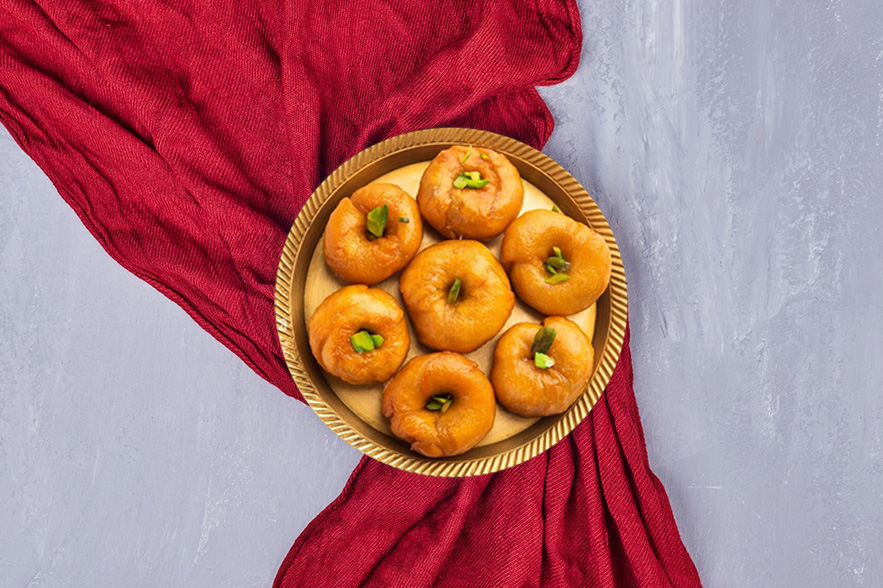
Balusahi – The Golden Flaky Sweet of Indian Festivities.
India is a land of festivals, and festivals are incomplete without sweets. From laddoos to barfis, every region of India has its own signature mithai that reflects its culture and heritage. Among these timeless delights is Balusahi – a sweet that not only pleases the taste buds but also tells a story of tradition, patience, and royal indulgence.
A Glimpse Into History
Balusahi is believed to have originated in the royal kitchens of North India centuries ago. With its crisp exterior, flaky layers inside, and a mild sugar syrup glaze, it quickly earned its place in the world of festive sweets. Interestingly, Balusahi is often compared to the Western doughnut because of its round shape with a slight depression in the middle. But unlike doughnuts, Balusahi is not bread-like or airy – it’s dense, layered, and fried in pure ghee, giving it an unmatched richness.
This sweet has been a wedding and festive staple for generations. Even today, in many parts of Uttar Pradesh, Rajasthan, Bihar, and Uttarakhand, no wedding is considered complete without trays of Balusahi.
What Makes Balusahi Unique?
Unlike most sweets that are prepared quickly, Balusahi is a labour of love. Every step – from kneading the dough to frying in ghee on low flame – requires time and patience. That’s what gives it its unique taste and texture.
✨ Key Characteristics of Balusahi:
- Simple ingredients, royal taste – made from flour, ghee, curd, and sugar syrup.
- Flaky layers – it breaks into beautiful crisp flakes with every bite.
- Mild sweetness – perfectly balanced, never overpowering.
- Long shelf life – stays fresh longer than many other sweets.
- Garnishing touch – topped with pistachios, almonds, or saffron strands for added elegance.
Balusahi in Indian Culture
Balusahi isn’t just a sweet – it’s an emotion tied to celebrations. In northern households, it is prepared during:
- Diwali – to welcome prosperity and light up family gatherings.
- Weddings – where it finds a permanent place in “shagun†mithai boxes.
- Festivals like Holi & Raksha Bandhan – shared as a token of love and togetherness.
- Temple offerings – considered pure and divine, Balusahi is often offered to deities.
Its presence on the festive thali is a symbol of abundance and joy.
The Art of Making Balusahi
The beauty of Balusahi lies in its preparation. Here’s a glimpse into the traditional process:
- Dough Preparation – Maida (refined flour) is mixed with ghee and yogurt, kneaded into a soft dough.
- Resting – The dough is rested to enhance texture and flakiness.
- Shaping – Small balls are flattened slightly with a depression in the center.
- Frying – Unlike regular sweets, Balusahi is fried on low heat in pure ghee until golden brown. This slow cooking gives it its crisp outside and soft inside.
- Sugar Syrup Coating – Finally, the golden Balusahis are dipped in warm sugar syrup infused with cardamom or saffron.
- Garnishing – Decorated with pistachios or almonds before being served.
The process is time-consuming, but the outcome is worth every bit of effort – a sweet that’s rich, flaky, and utterly satisfying.
Why Everyone Loves Balusahi
✔ A perfect balance of crispiness and softness
✔ Not overly sweet, making it appealing across generations
✔ Traditional and nostalgic – reminds many of childhood and family gatherings
✔ Ideal for gifting during festivals and weddings
✔ A mithai that reflects true Indian craftsmanship in cooking
Balusahi in Modern Times
While modern sweets and chocolates have gained popularity, Balusahi still holds a special place in the hearts of Indians. In fact, it is now being rediscovered by food lovers, chefs, and sweet enthusiasts for its authentic taste and cultural value. Boutique sweet shops and online mithai stores are bringing Balusahi back to the limelight, presenting it beautifully packaged for urban markets while keeping its authentic recipe intact.
A Bite of Tradition at DevBhoomi Wala
At DevBhoomi Wala, we believe in keeping traditions alive. Our Balusahi is prepared with:
- Pure ghee for that royal richness,
- Authentic recipe passed down through generations,
- Fresh ingredients with no compromises on quality.
Every bite you take connects you to the heritage of India’s sweet-making tradition.
Conclusion
Balusahi is not just a mithai; it’s a celebration of culture, tradition, and craftsmanship. Its golden layers carry the richness of India’s culinary heritage, and its presence on the festive table reflects abundance and happiness. Whether you’re enjoying it during Diwali, gifting it at a wedding, or simply relishing it with family, Balusahi will always bring joy and sweetness to every occasion.
No new comments
Check again later for new comments